Many minerals fluoresce in their natural state. The Fluorescent Mineral Society in the USA lists around 200 specimens with some fine images of minerals fluorescing under different wavelengths of UV light. And the Fluomin database lists well over 1100 types. Both databases have links to the RRUFF project which provides open access to information on minerals such as their infrared and Raman spectra and even X-ray diffraction data.
My own mineral collection is far more modest, limited to only thirty or so different specimens, collected over many years. Several of these fluoresce under UV light and with a small spectrometer, a UV lamp and an optical fibre probe, you can obtain and record their fluorescence spectra.
Experimental Technique
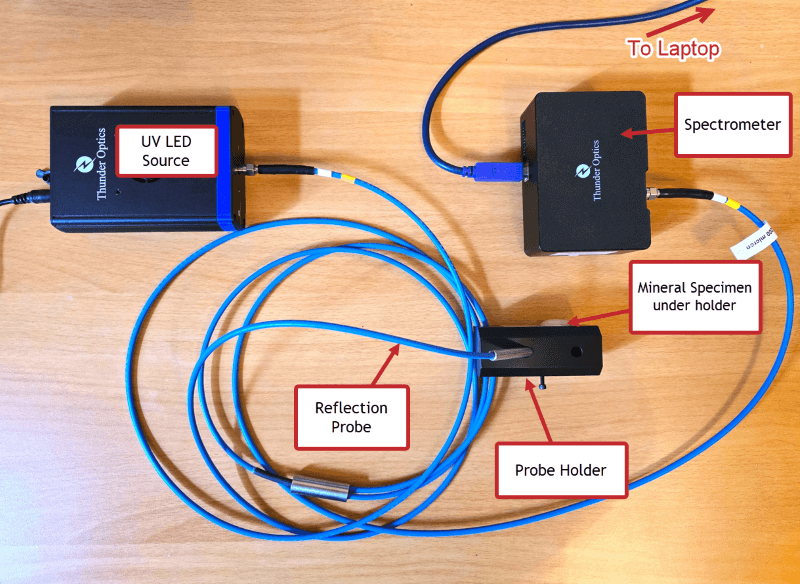
Fluorescence spectra of each mineral were obtained using this simple setup with a UV LED light source, an optical fibre reflection probe and a small spectrometer.
Fluorite
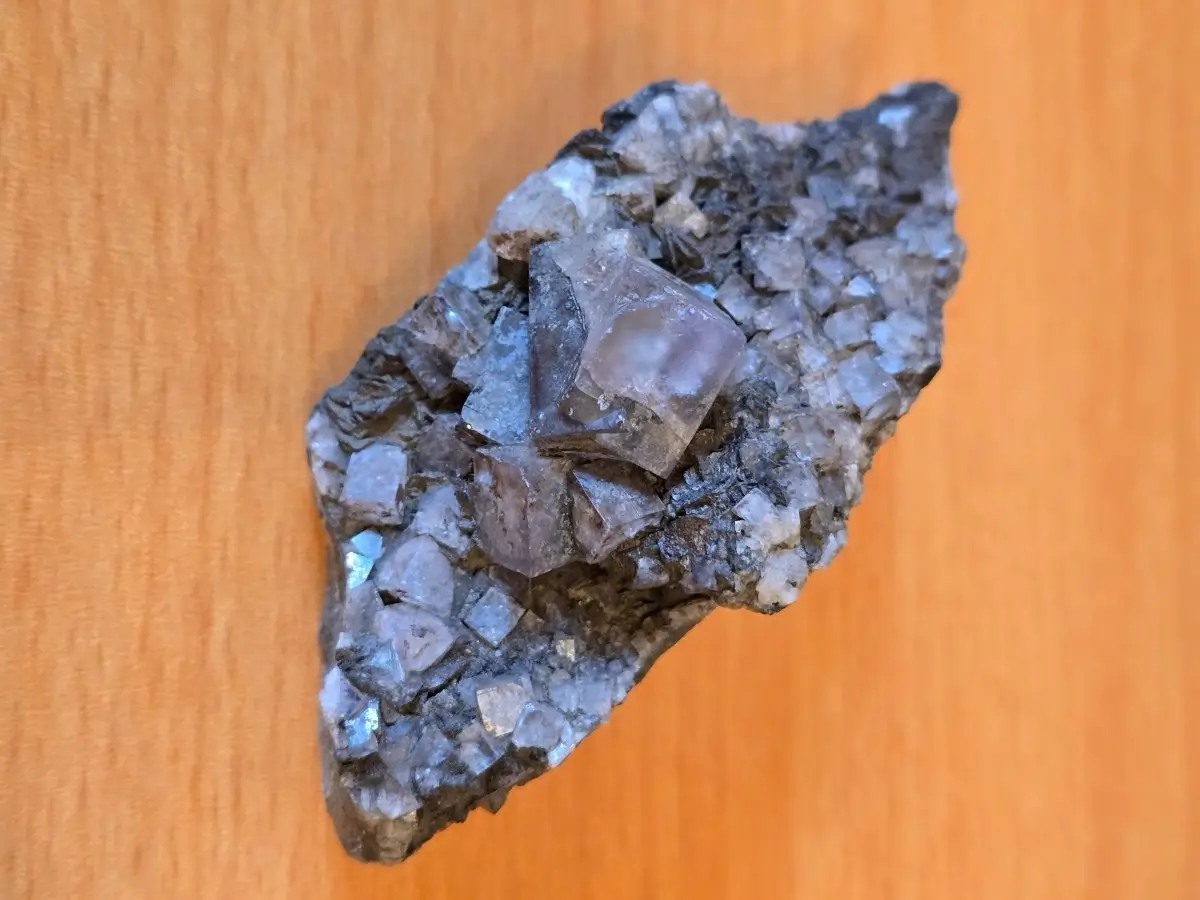
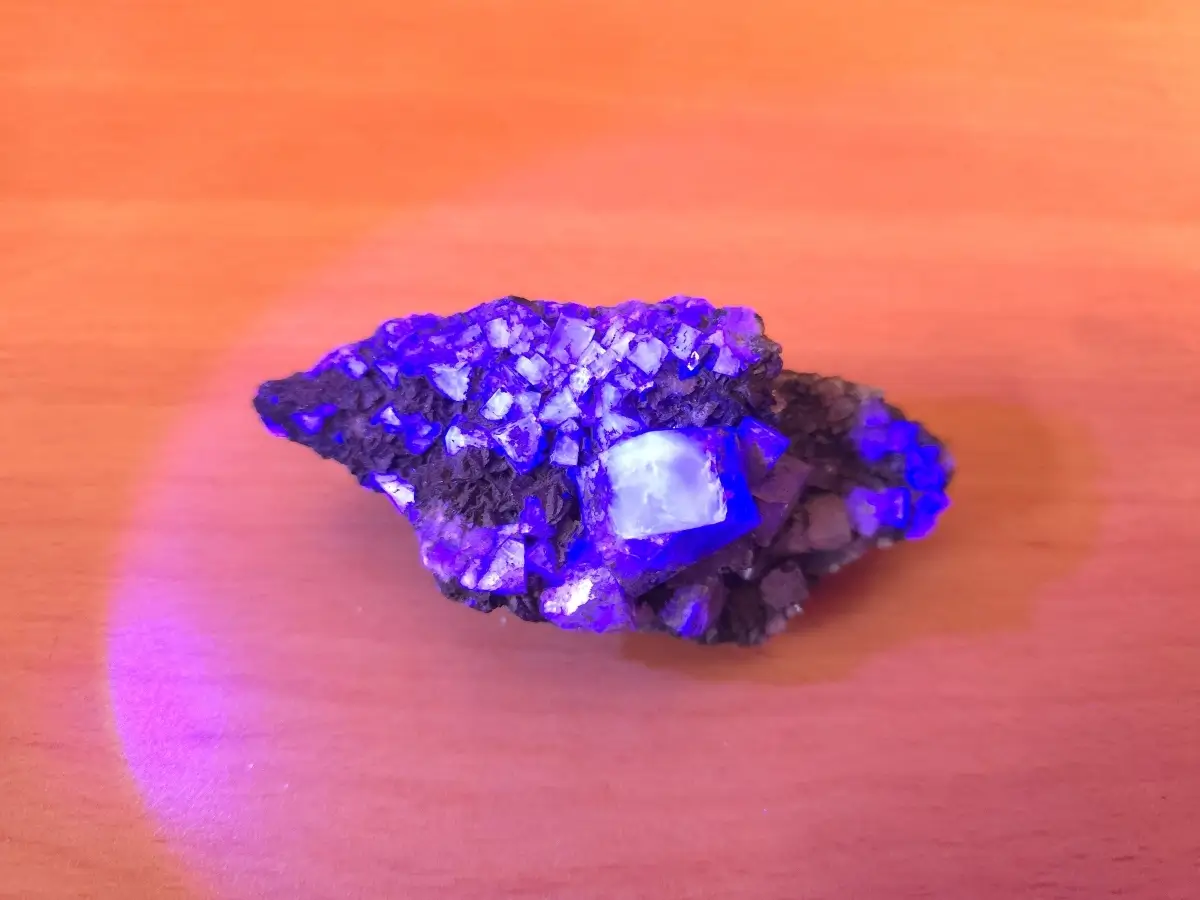
Fluorite, which is also known as fluorspar, is perhaps the best known mineral that fluoresces under the right conditions. Chemically, fluorite is calcium fluoride, CaF2. The scientific term “fluorescence” is actually derived from the word fluorite the mineral and not the other way round. This sample comes from Weardale, County Durham, England and exhibits extensive twinning which is common with the halite minerals such as fluorite. Twinning occurs during crystal growth when two separately developing crystals share common lattice points. So in this specimen we can see cubic crystals developing out of the face of another cubic crystal.
Room Light
UV Light
The Fluorescence Spectrum of Fluorite
Calcite
Chemically, calcite is one of the main polymorphs of calcium carbonate, CaCO3, and is extremely common. This is a good example of of the rhombohedral form of the mineral from Morocco.
Room Light
UV Light
Fluorescence Spectrum of Calcite
Cerussite
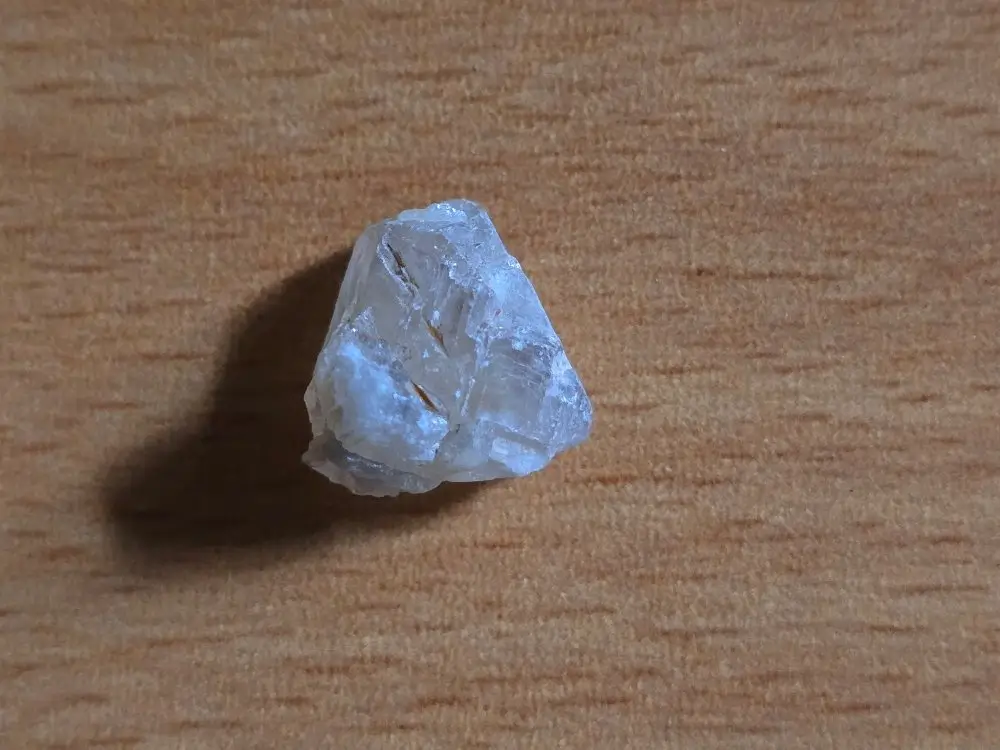
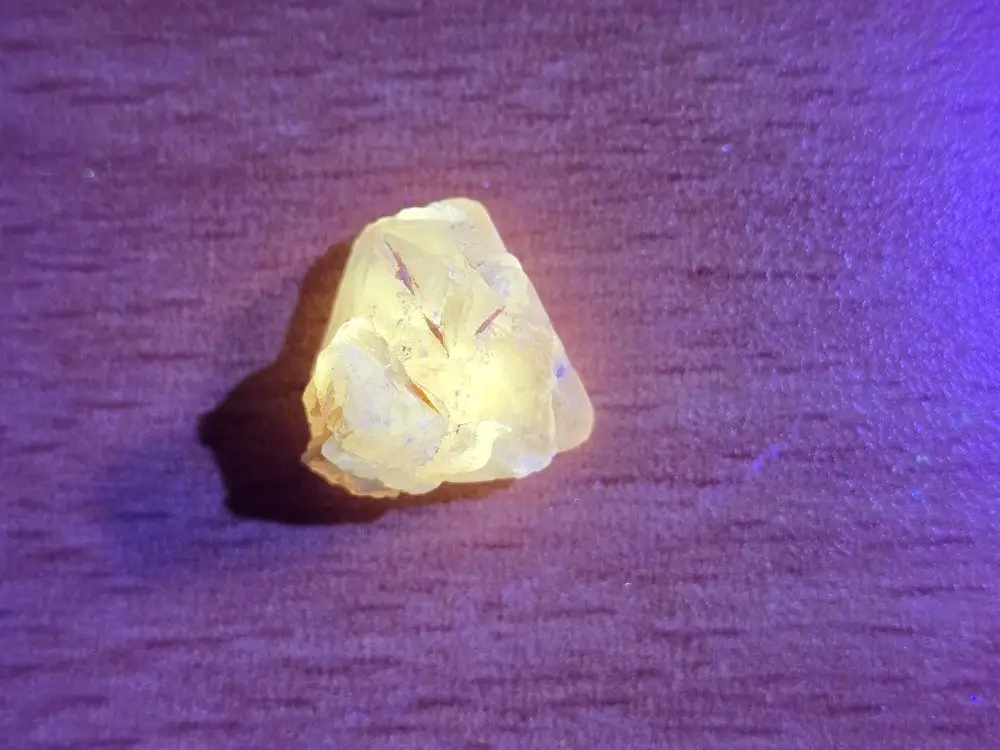
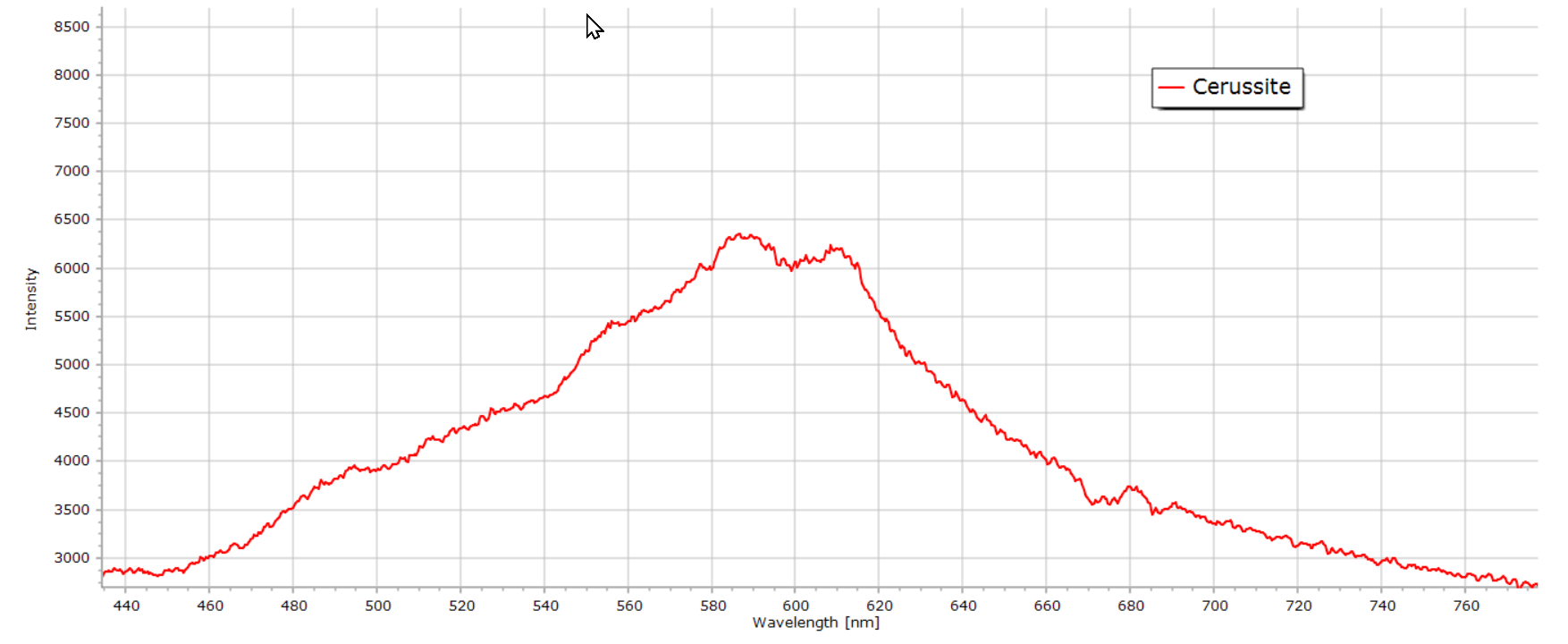
Cerussite is lead carbonate, PbCO3 and is an important source of metallic lead by its extraction from the ore. This small sample is just over 1 cm in length but already weighs around 10 g, far greater than an equivalently sized sample of calcite or similar mineral with a lower density. Under UV light, the mineral fluoresces in the yellow.
Room Light
UV Light
Fluorescence Spectrum of Cerussite
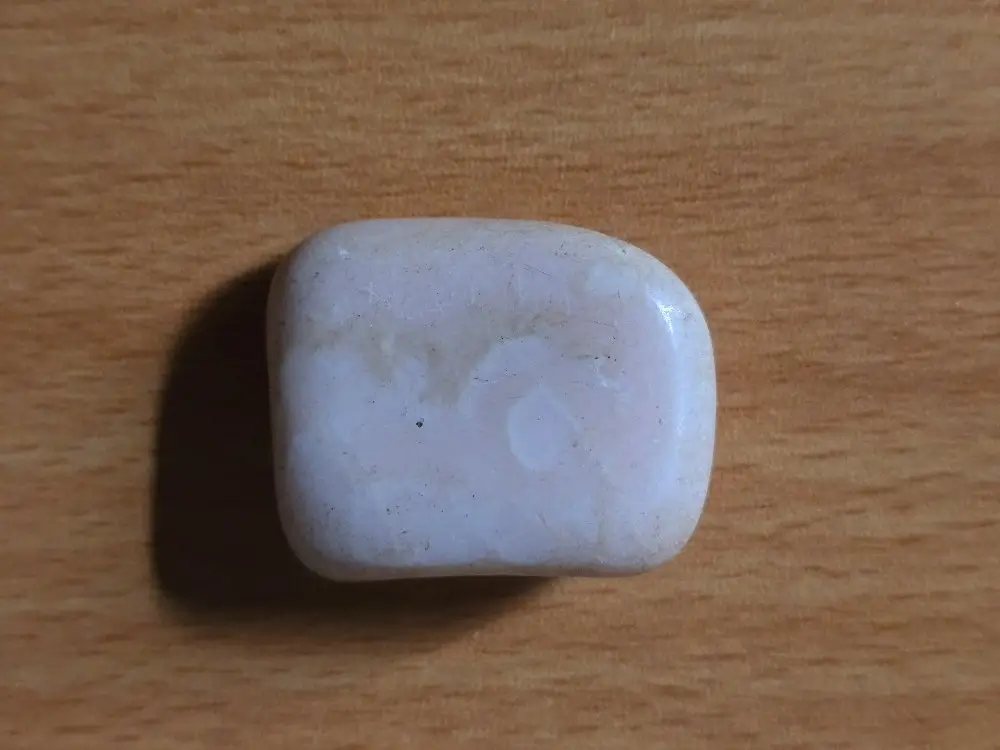
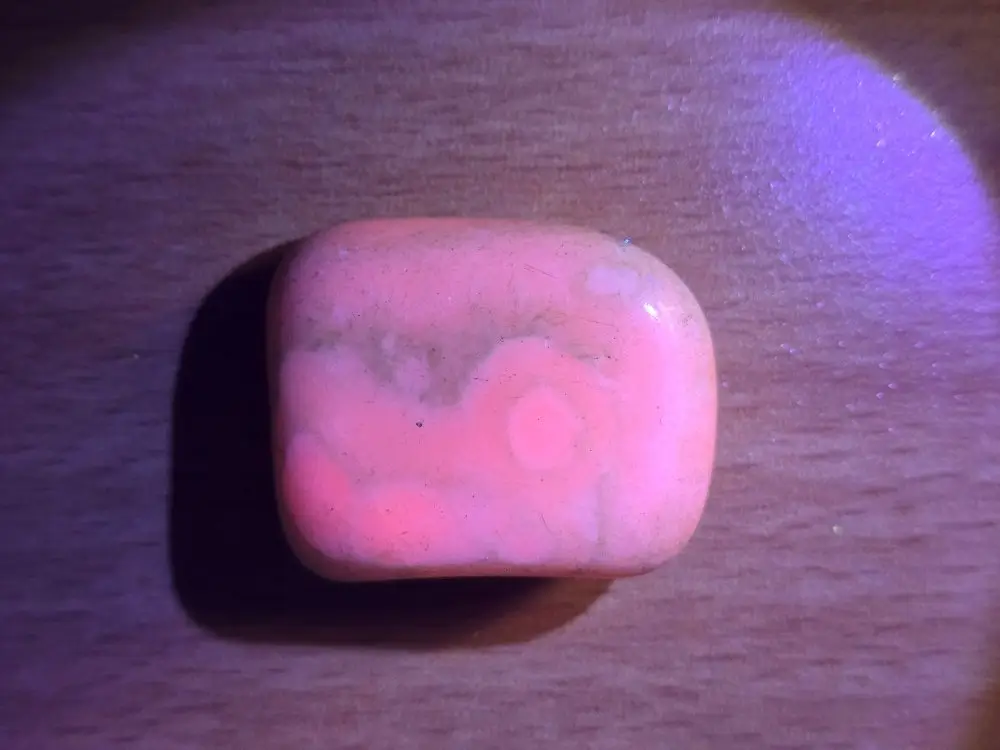
Mangano Calcite
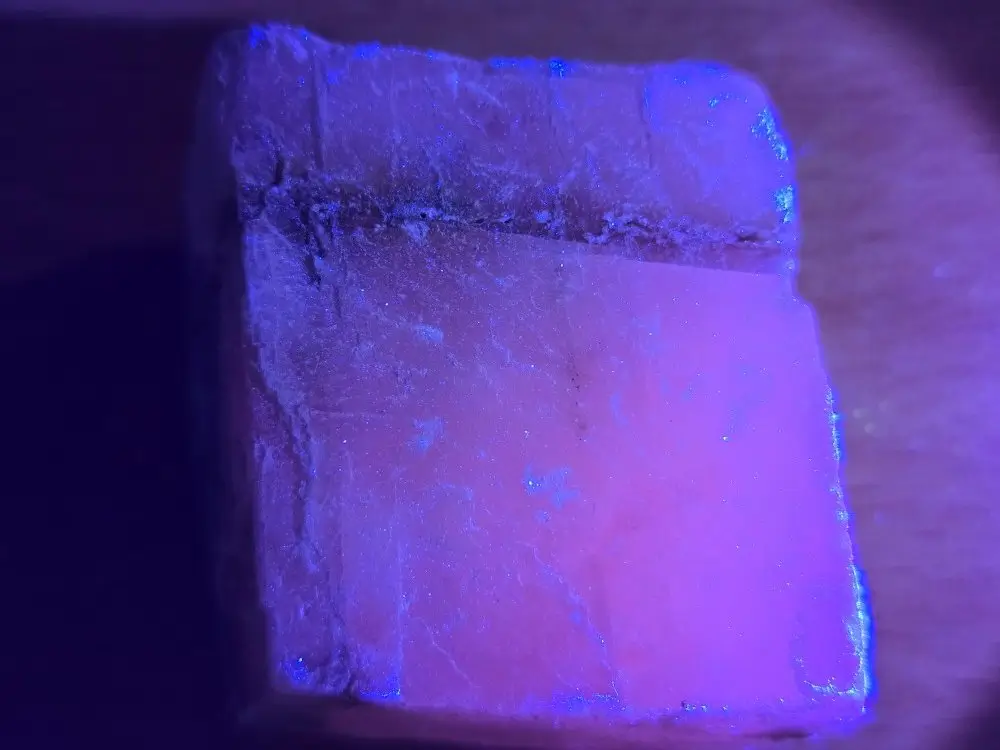
Mangano calcite is a variety of calcite that is rich in manganese ions. So the chemical formula can be expressed as (Ca,Mn)CO3. This sample originates from Peru, but the mineral is widely distributed.
Under room light, my specimen is tinged slightly pink, although this is not evident from the photo. But under UV light the pink coloration is pronounced as the manganese ions in the mineral strongly fluoresce.
Room Light
UV Light
Fluorescence Spectrum of Mangano-calcite
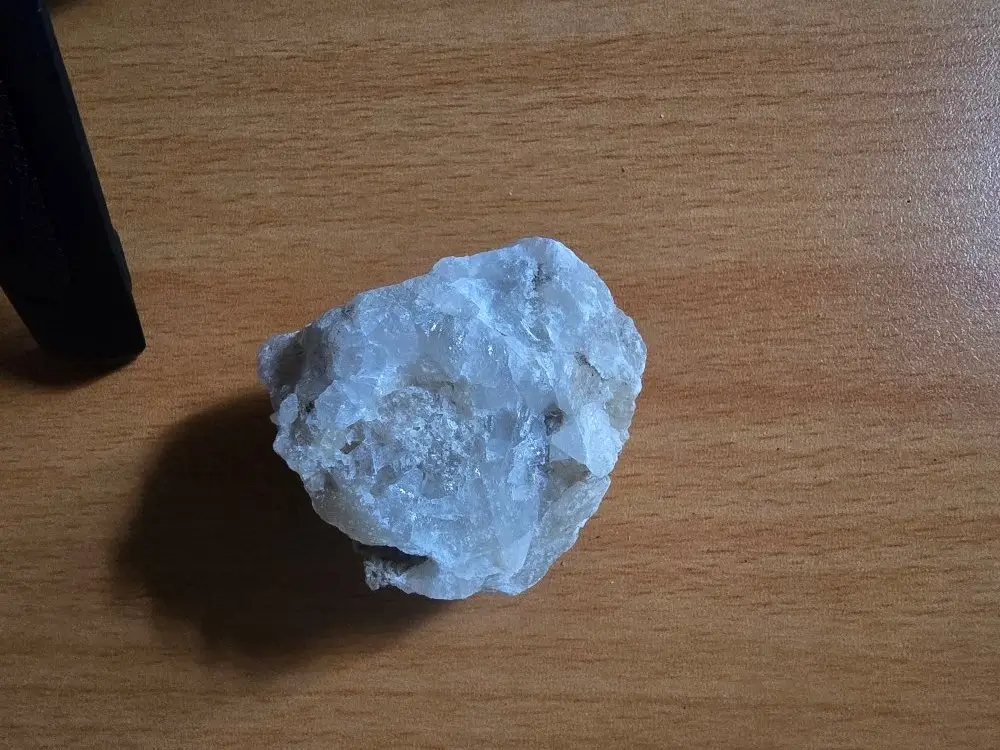
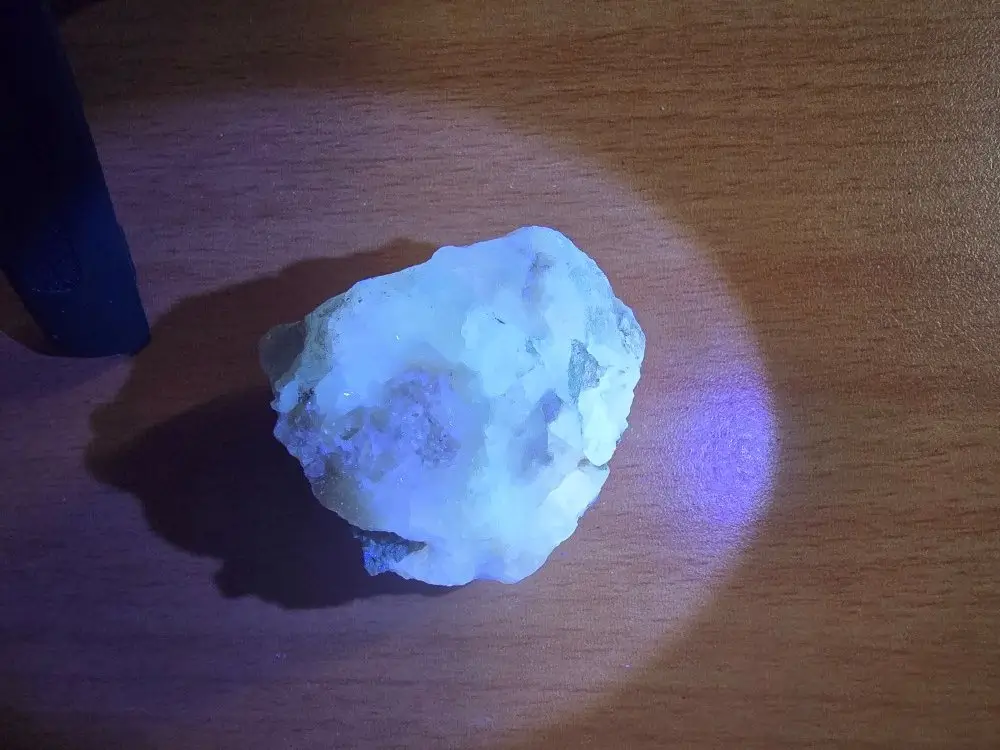
Travertine
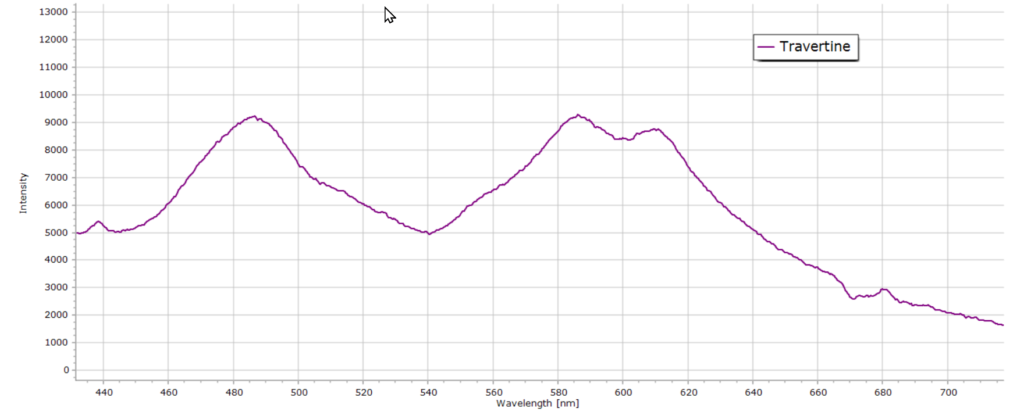
Travertine is also a calcium carbonate based mineral, common around the world, that often forms as deposits around hot limestone springs. This sample comes from Yorkshire (UK) and the mineral exhibits broad band fluorecence across the spectrum, perceived by the eye as blue-white in colour.
Room Light
UV Light
Fleorescence Spectrum of Travertine
Chalcedony
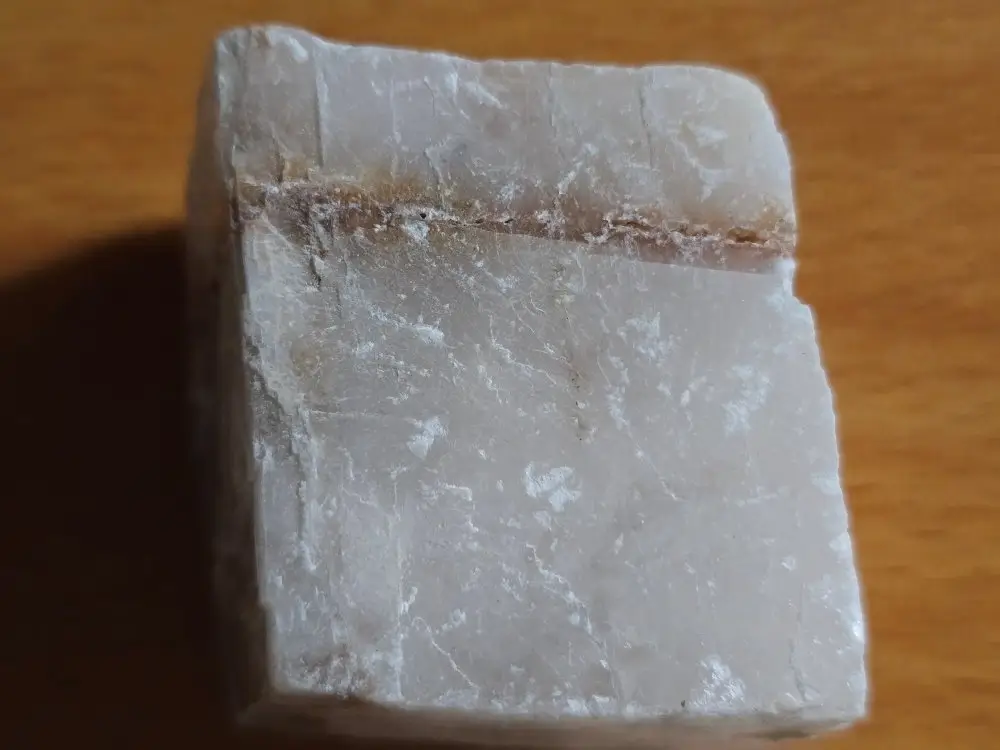
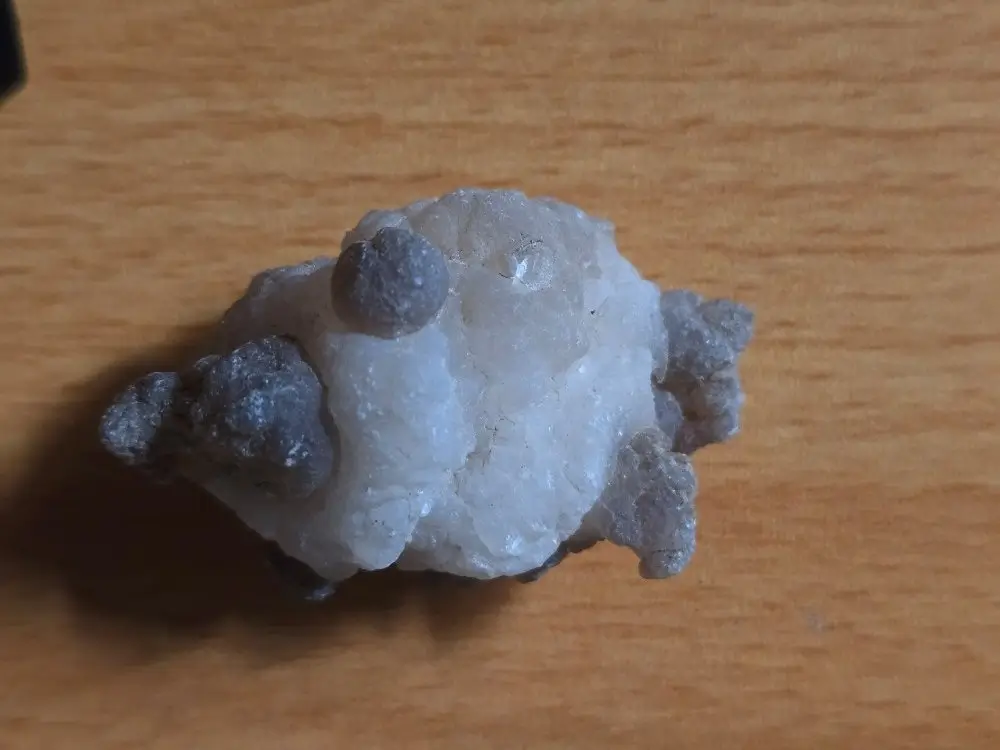
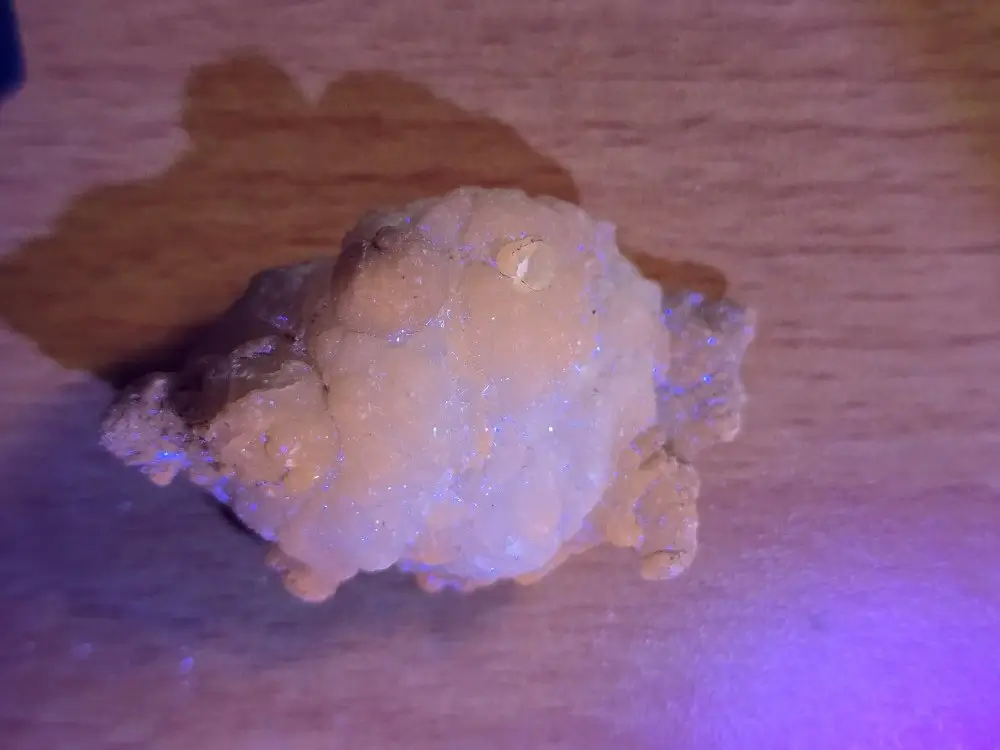
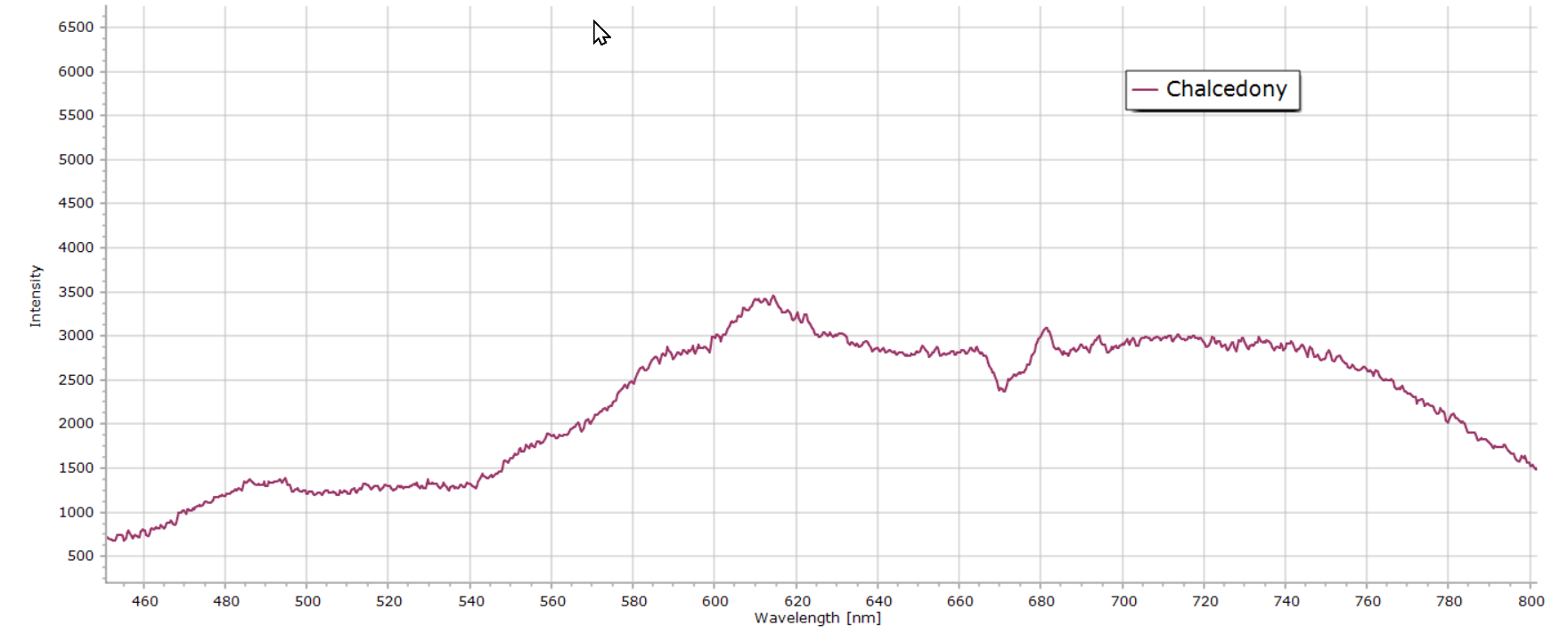
Chalcedony is a form of silicon dioxide (silica), SiO2. This nodule comes from Morocco. It fluoresces with a pale orange light when exposed to UV, as shown below.
Room Light
UV Light
Fluorescence Spectrum of Chalcedony
Lapis Lazuli
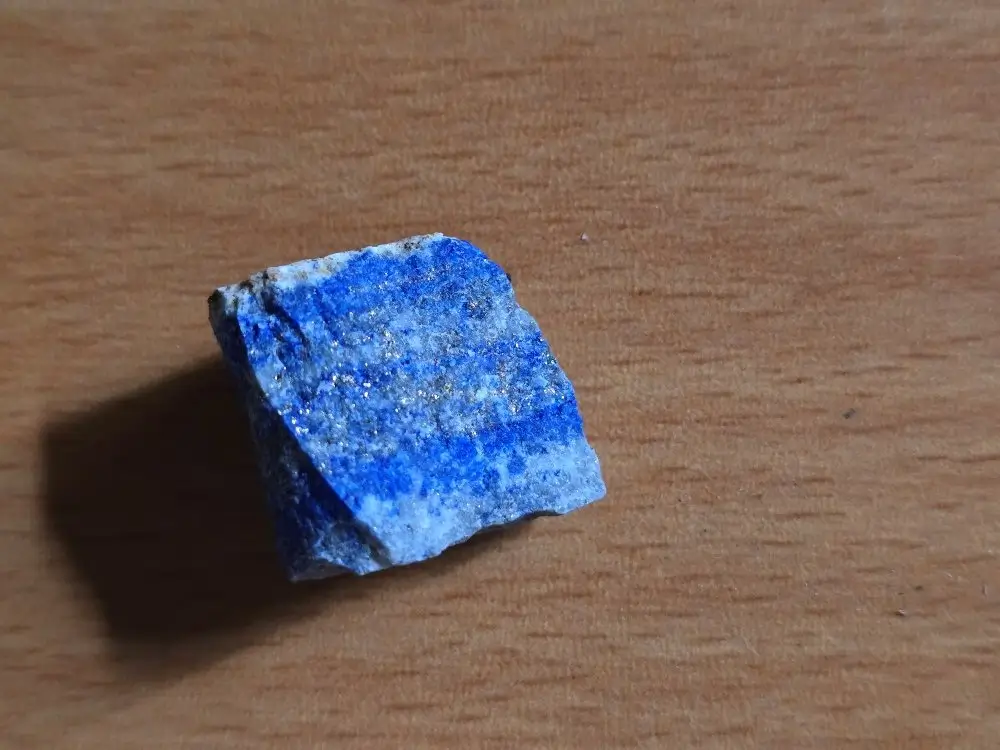
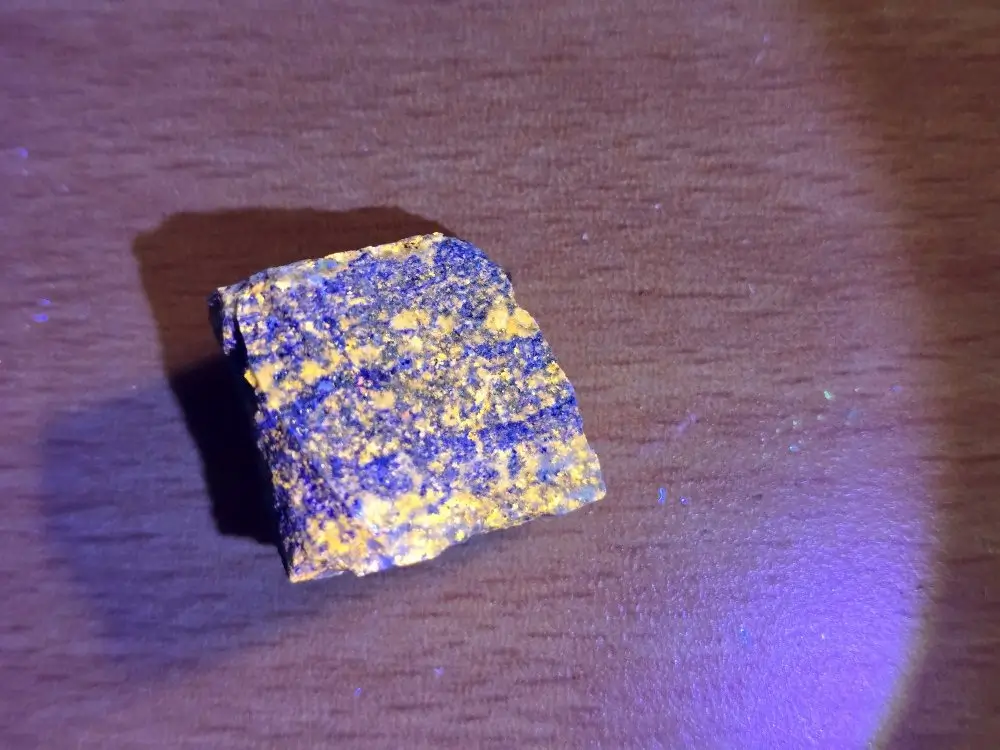
Lapis Lazuli consists of a mixture of different minerals, so it is best described as a metamorphic rock. The main minerals in Lapis Lazuli are lazurite, calcite, diopside and pyrite. Because of its lustrous blue colour, which comes from lazurite, it is considered a semi-precious stone.
Room Light
UV Light
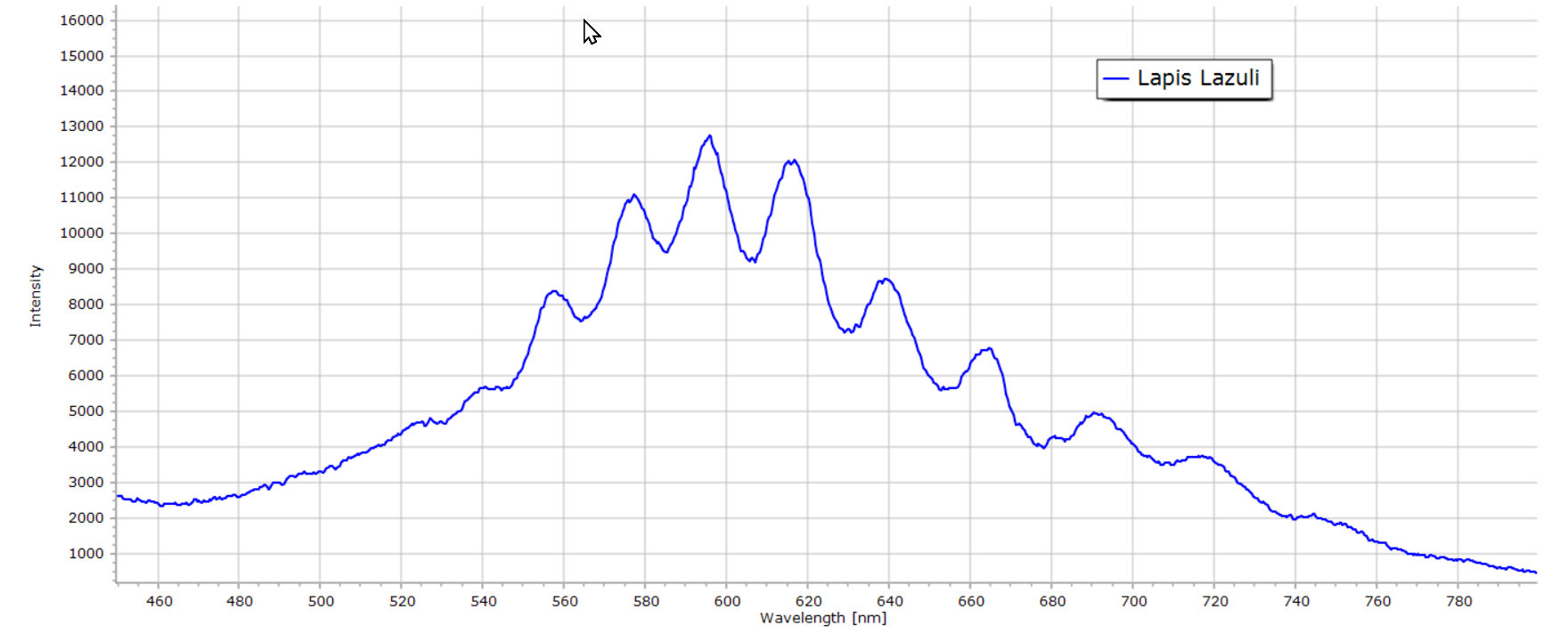
Fluorescence Spectrum of Lapis Lazuli
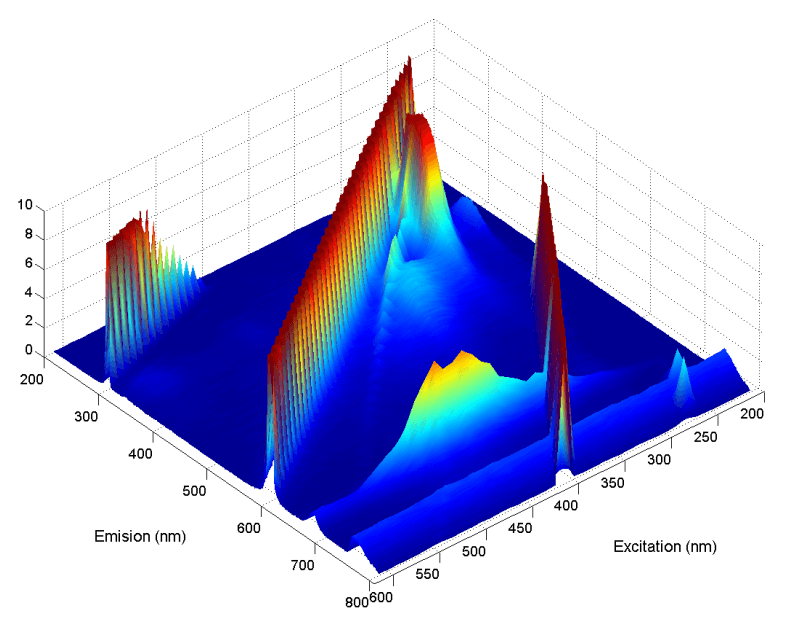
I was slightly surprised to see the above fluorescence spectrum with its multiple band structure. This is significantly different from the spectra of the other minerals recorded above. However, lapis lazuli does consist of a mixture of minerals, each with metallic impurities, which may account for this complex fluorescence band structure. And similar spectra in fluorescence have been observed before, as shown in this example from the fluomin database.
These are just a few examples from my own humble mineral collection. The interested reader can peruse the databases mentioned earlier for many more examples.
Add Your Heading Text Here
From the Laboratory Notebook at Steve's Open Lab
Steve’s Open Lab documents instrument development, independent lab investigations and practical scientific demonstrations. Some articles describe complete experiments, while others record progress in longer-term research projects as new observations become available. Whether you’re looking for a quick experiment or following an ongoing investigation, I hope you’ll find something here that sparks your own curiosity.
I recently obtained a sodalite sample that glows the classic “pumpkin orange” color under 400 nm excitation. This is caused by disulfide or trisulfide radical anions which impose ~560 cm^-1 infrared vibrations on the visible emission spectrum. I can’t see this with my simple handheld spectroscope (just a broadband glow from 500 nm to 650 nm, but a lot of NIR emission is also visible with a night vision scope and suitable filtration), but you managed to pull it off with your lapis lazuli sample (a close cousin of sodalite) and your much higher quality gadgets. Great job! I have only seen this vibrational progression of polysulfide in scientific papers online. Many thanks for showing the amateur scientist community that we really can do research in the home laboratory.
Respectfully,
Gerry Francisco
P.S.: See the pdf paper, “Fine Structure in Photoluminescence Spectrum of S2– Center in Sodalite”, for more info.!





1 thought on “Luminescent Minerals”
Dear Steve,
I recently obtained a sodalite sample that glows the classic “pumpkin orange” color under 400 nm excitation. This is caused by disulfide or trisulfide radical anions which impose ~560 cm^-1 infrared vibrations on the visible emission spectrum. I can’t see this with my simple handheld spectroscope (just a broadband glow from 500 nm to 650 nm, but a lot of NIR emission is also visible with a night vision scope and suitable filtration), but you managed to pull it off with your lapis lazuli sample (a close cousin of sodalite) and your much higher quality gadgets. Great job! I have only seen this vibrational progression of polysulfide in scientific papers online. Many thanks for showing the amateur scientist community that we really can do research in the home laboratory.
Respectfully,
Gerry Francisco
P.S.: See the pdf paper, “Fine Structure in Photoluminescence Spectrum of S2– Center in Sodalite”, for more info.!