
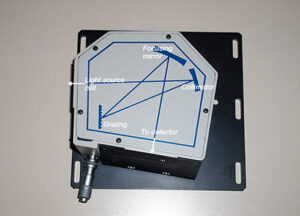
Pushing the Limits of a Small Spectrometer
Introduction Readers of this blog may have noticed that in many of my posts on spectroscopy in the UV and visible, I often use the
Introduction Readers of this blog may have noticed that in many of my posts on spectroscopy in the UV and visible, I often use the
In a previous post I described one of the “workhorses” I have been using for several years for recording spectra. This is the Oriel MS125
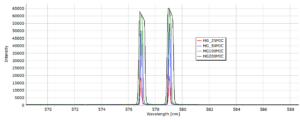
Introduction There are a number of technical constraints to consider when selecting a spectrometer for a particular application, whether this involves purchasing a commercial model
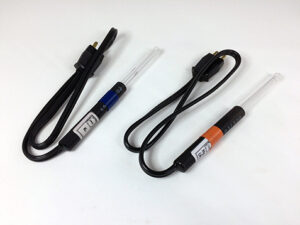
The calibration of spectra in wavelength λ that you will see in these different posts has usually been performed with commercial “pencil-type” spectral lamps of
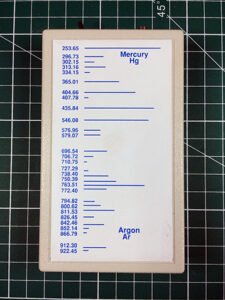
Introduction Modern spectrometers today, regardless of their size, employ sensitive linear CCD and CMOS sensors. The most popular sizes have 1024, 2048 and more recently
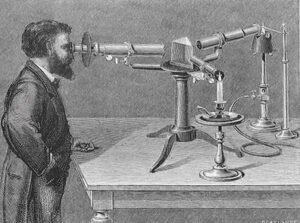
Introduction The development of the spectroscope over the last 160 years since its invention has paralleled the evolution in technological advances. This is particularly the
In a previous post we described in scientific terms the basic principles of the optical phenomenon of reflection. The definition of the percentage reflectance of
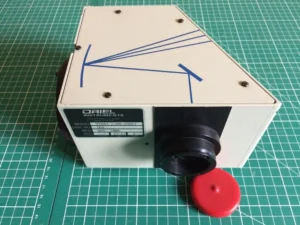
Introduction As its name implies, this spectrometer has a fixed diffraction grating. So the wavelength range available and the resolving power (the spectral resolution) are
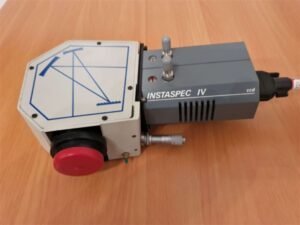
Introduction MS125 This is a very versatile spectrograph that I have used over the years to record a variety of spectra from various emission sources,
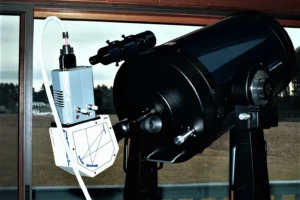
Introduction Several years ago I connected the MS125 spectrometer to a 12 inch Meade LX200 telescope to test its suitability for recording stellar spectra. In